Deeper Well: Kacey Musgraves' Retreat
Kacey Musgraves' fifth album is the record of an artist deliberately stepping back from the cultural centre she had briefly occupied. An argument for the retreat as a specific creative choice.
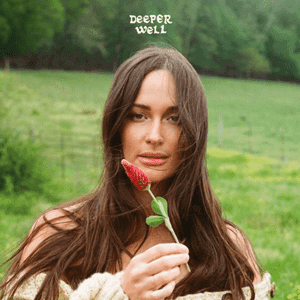
Poster / promotional material via Wikipedia, Deeper Well. Used under fair use for criticism and review.
Kacey Musgraves’ Deeper Well, released in March, is the fifth studio album of one of the more critically-decorated country-pop crossover careers of the last fifteen years. Musgraves won Album of the Year at the Grammys in 2019 for Golden Hour (2018), a record that reoriented American country-pop around a specific psychedelic-Laurel-Canyon aesthetic. Star-Crossed (2021) was the fractured post-divorce follow-up.
Deeper Well is, in its programme and its sound, a specific retreat from the commercial spotlight those previous records positioned her inside. I want to argue that the retreat is the album’s most interesting feature.
What the record is
Fourteen tracks, forty-three minutes, co-produced by Musgraves with Daniel Tashian and Ian Fitchuk (the Golden Hour team). The sonic palette is acoustic-forward: fingerpicked guitars, pedal steel, strings, occasional mandolin and dulcimer. The production is relatively spare. The songs are, mostly, short. The overall effect is a folk-adjacent record made by a country-pop artist who has decided, at least for this record, that the commercial pop-production choices of her previous two albums are not what she wants right now.
The record’s writing is, similarly, quieter than her previous work. Where Golden Hour turned its specific psychedelic-country language into sing-along choruses, Deeper Well is organised around specifically adult meditations on self-forgiveness, on the specific quiet work of building a new life after a divorce, on the texture of mid-thirties domestic recovery.
Why the retreat is interesting
American country-pop has, across the last five years, been increasingly dominated by specifically large sonic gestures: big drums, big choruses, big pop-radio-ready productions. The commercial centre of the genre has moved toward the specific Morgan-Wallen-Zach-Bryan axis of stadium-country. Deeper Well is not making any of the moves that centre would reward.
Musgraves is, on this record, specifically refusing the commercial expansion that Golden Hour’s success had positioned her to make. She could, plausibly, have made a bigger pop-country record and expanded her audience further. She has, instead, made a smaller one.
This is a career-defining kind of refusal. It is also the specific refusal that a certain kind of American singer-songwriter has made at roughly this stage of her career. Joni Mitchell made it. Lucinda Williams made it. Gillian Welch made it. The move is to quiet down after a commercial peak, focus on specifically-written short songs, and trust the audience to meet you at the new register.
Where the album is strongest
The title track, “Deeper Well,” is the single most formally confident song on the record and the specific statement of intent. It is a fingerpicked acoustic meditation on leaving behind specific people and specific habits that Musgraves has decided she can no longer afford. The writing is direct, the melody is hymn-like, the arrangement is restrained. The song sounds like a specific kind of American folk-country music that has been out of commercial favour for thirty years and that Musgraves is specifically trying to re-inhabit.
“The Architect,” which follows “Deeper Well” in the tracklist, is a specifically theological song about questioning the design of the world in the face of specific personal suffering. The song is willing to ask large questions in plain language, which country music at its best has always done and which country music in its current commercial form has mostly stopped doing.
“Heart of the Woods” and “Nothing to Be Scared Of” are two of the record’s shortest songs, and they are the ones I return to most often. Both are under three minutes. Both are structured around specific imagery of physical retreat into nature. Both are, in their understated way, among the best things Musgraves has written.
Where the album wobbles
The album’s middle stretch (tracks six through ten) contains several tracks that, while pleasant, do not distinguish themselves at the level the album’s strongest material demands. “Anime Eyes,” in particular, has a specific conceptual thinness that the production cannot compensate for. The record would be stronger at twelve tracks than at fourteen.
This is a common problem for records made in the specific restraint-mode Musgraves has committed to. When every song is operating in a quiet acoustic register, the weaker songs become more noticeable, not less.
What the album signals
Deeper Well has, commercially, performed modestly but not spectacularly. It debuted at number two on the Billboard 200 and has held chart presence. It has not, however, generated the specific cultural conversation Golden Hour did at its release.
This is consistent with the album’s specific intent. Musgraves appears to have made the record for her existing audience rather than for an expansion of it. The people who were already listening have received a careful, adult, quietly-written record. The people who were not already listening have mostly not been drawn in.
What it means for country music
The broader cultural significance of Deeper Well is that it represents one of the few contemporary commercial-country records willing to operate outside the current commercial-country centre of gravity. Musgraves has, at this point in her career, the institutional-industry position to make records at her own specific register without requiring immediate pop-radio validation. Most Nashville artists at her commercial tier cannot make this choice. She can.
Whether this creates space for other artists to make similar choices is an open question. The commercial-country ecosystem rewards specific large-gesture songwriting, and most artists cannot afford to step away from it. Musgraves can. She is doing so.
Put Deeper Well on at a specific late-afternoon time. Skip “Anime Eyes” if it does not land. Come back to “Deeper Well,” “The Architect,” and “Heart of the Woods.” The album is smaller than her previous ones. It is also, in specific ways, more patiently written.
Jules writes the kind of pieces that come from wandering somewhere and overhearing something. On Frame Junkie's masthead since the beginning.
MORE BY JULES OKONKWO →
Hit Me Hard and Soft: Billie Eilish Grown Up
Billie Eilish's third album is a quieter, longer, more patient record than the one she was commercially expected to make. It is also, easily, her best.

Cowboy Carter: The Beyoncé Record That Became a Genre Argument
A year out, Beyoncé's country album is not a country album. It is a demolition project. An argument for Cowboy Carter as one of the most important genre interventions of the decade.
CHROMAKOPIA: Tyler, the Creator's Paranoia Record
Tyler, the Creator's eighth album dropped on a Monday morning, which was a specific choice. The record itself is the specific choice that matters.